
How to read a Clivia listing
Daniel Pretorius · 5 min read · 29 August 2026

Every listing on this site is a record first and an advert second. The facts on a plant's page come straight from the register, and where a fact was never captured the page simply leaves it out. Nothing is padded, and nothing is guessed. That makes the pages quiet, and it means each line that does appear is worth reading properly. Here is how.
The colour class
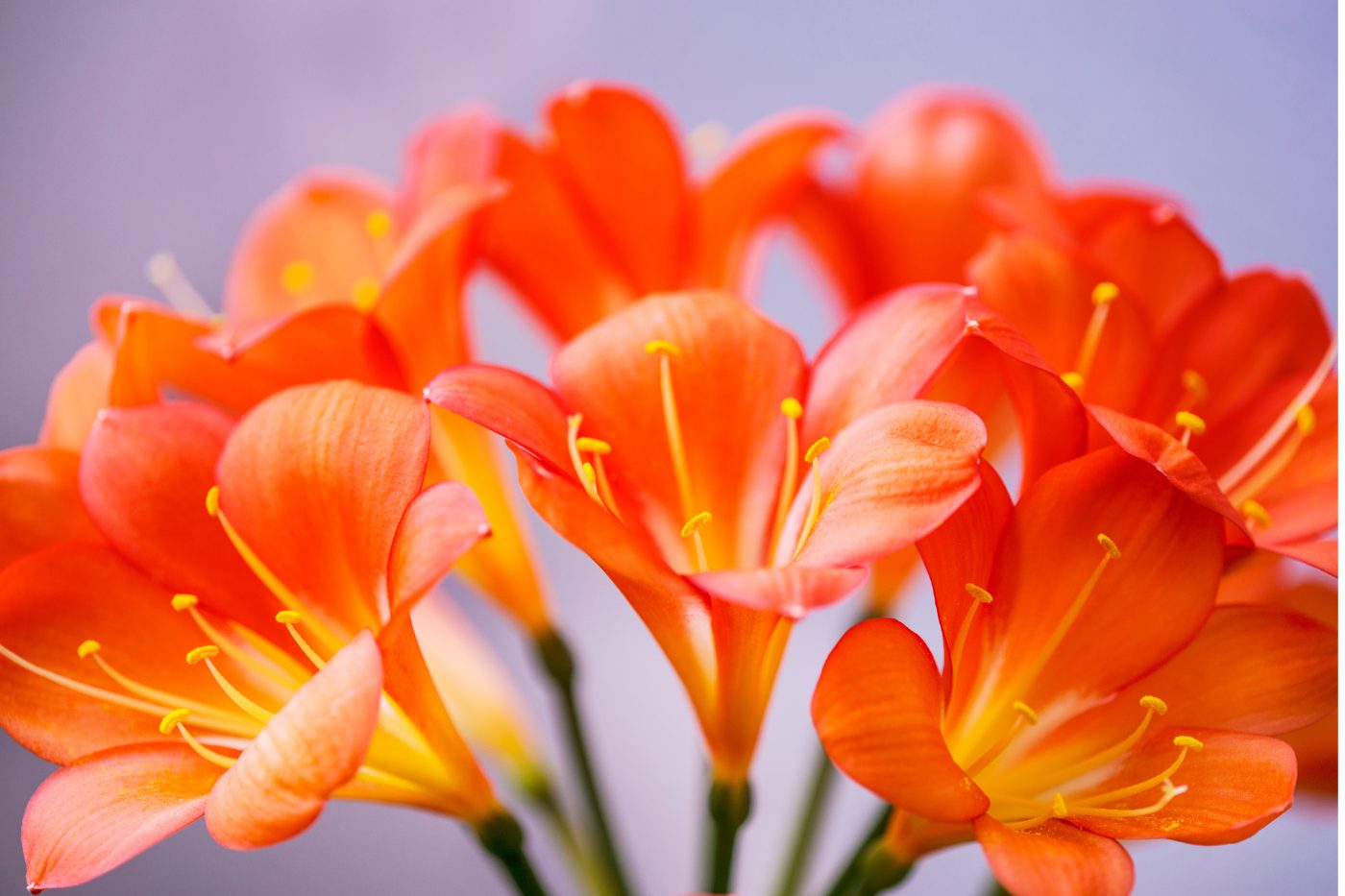
Colour is not a marketing adjective here; it is a class, and the classes follow the Clivia Society standards, the same vocabulary used on the show bench. The solid colours run from Red through the oranges (Dark Orange, Orange, Light Orange), the yellows (Dark Yellow, Yellow, Light Yellow), then Pink, Apricot, Salmon, the peaches (Dark Peach, Peach, Light Peach), Green and Bronze.
Beyond the solid colours sit the pattern classes, and these are where the vocabulary earns its keep:
- Green Throat: a significant green centre to the flower. The deeper and more extensive the green, the better it is judged.
- Appleblossom: a blush of orange or red suffused onto white or yellow petals, named after the wild Apple Blossom series.
- Picotee: throat colour running almost the full length of the tepal, leaving only a thin rim of a second colour as a continuous ring. A white ring is called a Geneva Edge.
- Two-Tone and Bitonal: the inner and outer rings of tepals differ, in colour for two-tone, in shade of the same colour for bitonal.
So when a listing says Bronze or Light Peach, that is a placement within a standard, not a flourish. The catalogue filters use the same classes, which is why you can ask it for every green-throat plant in stock and trust the answer.
Shape and leaf
Two more classed traits can appear. Flower shape follows the same standards: Standard is the familiar open, rounded miniata flower; Tulip curves its tips inward into a cup; Spider has narrow tepals at least five times as long as they are wide; Multi-tepal carries more than six tepals on every flower of the head; Petite stays within 45 millimetres. Variegation describes the leaf, not the flower: Striped is the common one, many fine lines running base to tip, with rarer patterns like the margined Fukurin type, the half-and-half Mandarin Duck, Light of Buddha, Akebono and Tiger. A plain green plant is simply listed as solid, and a plant whose pattern has not been formally classified says so.
The cross line
The line that says Cross is the plant's parentage, written the way the register has always written it: the mother first, the pollen parent second, joined by an X. A cross like 322 X Mc Neel Green Girl means plant number 322 carried the seed and the named plant supplied the pollen. SELF means the plant was pollinated with its own pollen. The cross is quoted word for word from the register, nested brackets and all, because the original wording is the record. If a plant's cross was never written down, the line does not appear, and the plant is honestly what it looks like: a good flower with an unrecorded past.
Maturity, and what a bag holds
Maturity tells you what stage of life you are buying: seedling, juvenile, mature, flowering, or offset. A flowering plant shows you exactly what you are getting; a seedling is a considered bet on its parents. Where it was counted, the listing also gives a leaf count, the finer grade a grower actually uses between seedling and first flower. Batch listings, mostly seedlings and seed, state how they are sold: per pot, per bag or per packet, and how many plants each unit holds.
The badges: One available, Held, Sold
Next to the price sits a small badge, and it is live, not decorative:
- One available means the listing is a unique specimen. There is exactly one of this plant in the world, and this is it. Batches show a count instead, such as 6 available.
- Held means someone has it in checkout at this moment. A hold lasts only while their payment window is open, up to thirty minutes, so a held plant that is not paid for returns to available on its own.
- Sold means the plant has gone, but the page stays. A sold specimen keeps its page as the record of that plant in the collection, which is exactly how a register should behave.
The tag on the pot
Every plant that leaves here carries a printed tag with a QR code and a short printed code beneath it. Scan it and you land on that plant's own page: the listing while it is for sale, the specimen's record after it is sold. The printed code carries a built-in check character, so a code entered with one wrong letter shows a clear message instead of quietly opening the wrong plant. The tag is the modern end of the same thread as the register number: years from now, in someone else's garden, the plant can still tell you what it is.
Price on request
Some listings show Price on request instead of a figure. This is not a negotiating tactic. It means the plant has been captured and photographed but its price has not yet been set, usually because pricing happens at stock take, plant by plant, and a plant is not offered at a number that has not been decided. If one of these catches your eye, write to info@cliviasforsale.com or use the request a plant form, and you will get a straight answer.
Read this way, a listing stops being a product page and becomes what it actually is: one plant's entry in a working register, with a price attached. Browse the catalogue with that in mind and the quiet lines start to say quite a lot.