Back to the Greenhouse Journal
The intricacies of Clivia genetics (and why most Clivia are orange)
Luka Gouws and Daniel Pretorius · 3 min read ·
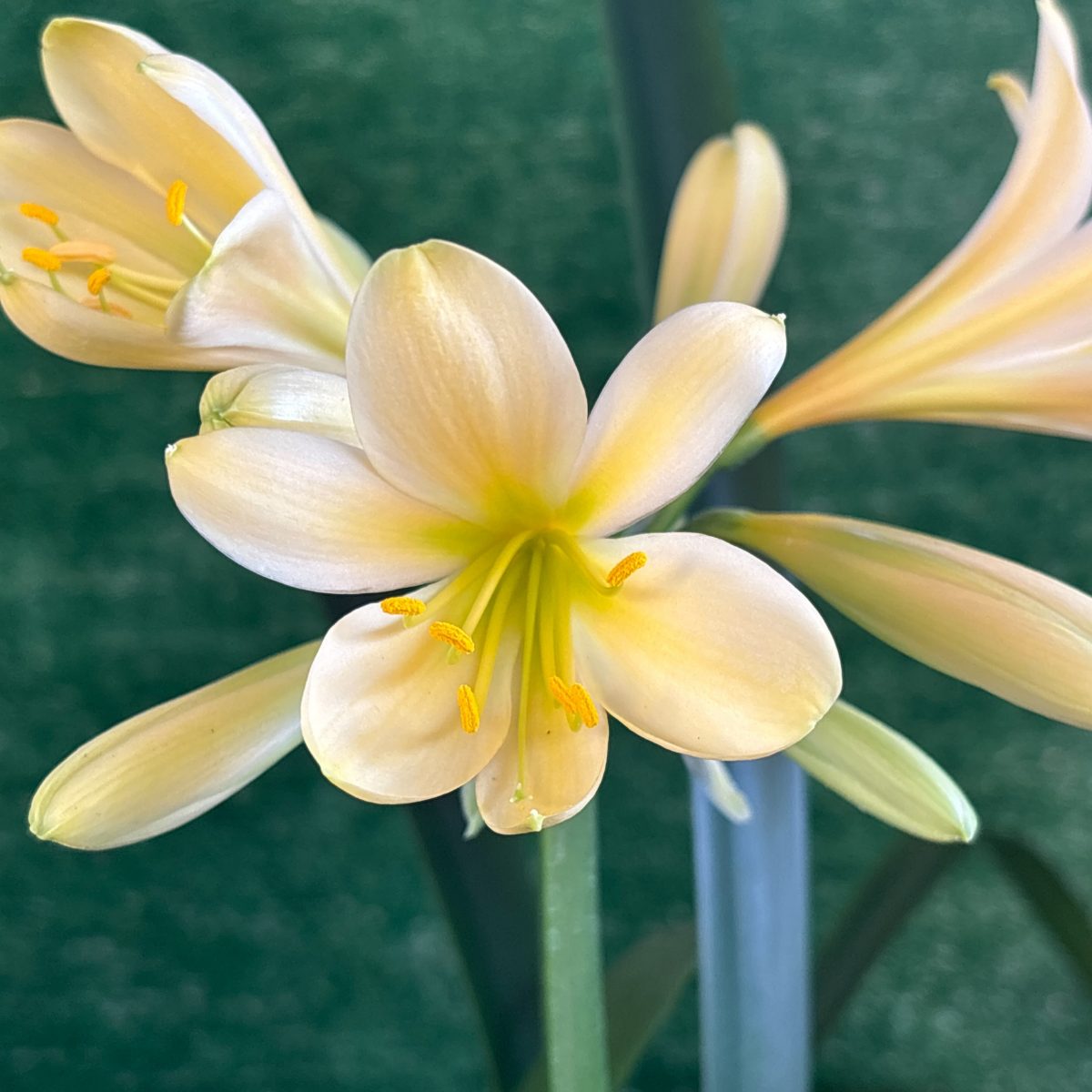
When you look at any flowering plant, the first thing anyone notices is the colour. Clivia are no different. While breeders spend years cultivating peach, apricot, green and a myriad of other colours, most people associate Clivia with their distinctive orange hue. In the wild, Clivia can sometimes have yellow flowers, but it's rare. This is all genetics: dominant and recessive traits. Even the most proficient breeder sometimes sees an offset from a yellow-flowering plant bloom orange. Let's explore why.
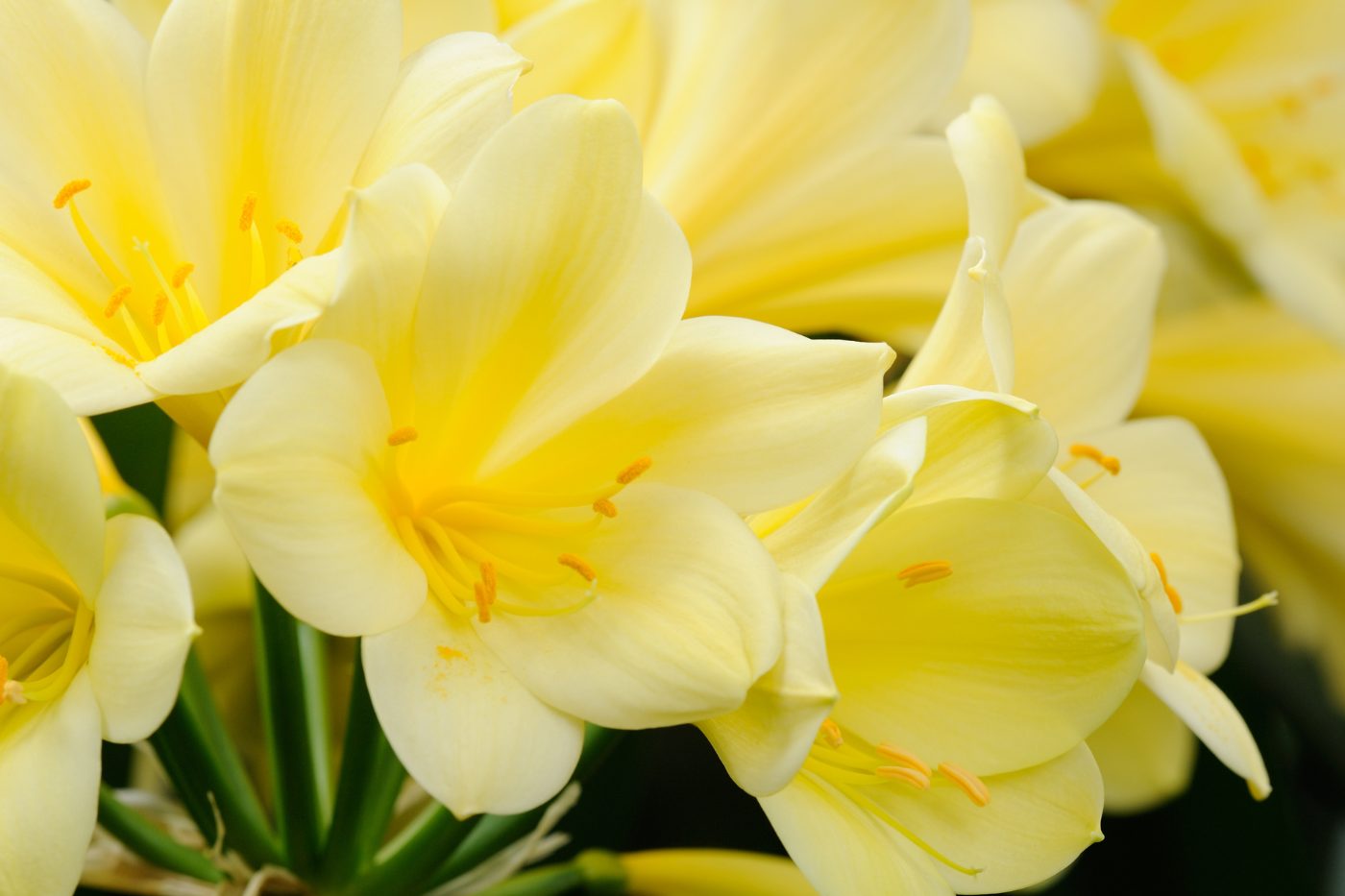
Why is orange dominant and yellow recessive?
Plants are not that different from humans: they also have two parents that give them the two halves of their genes that make them who they are. And, just like humans, their genes can be dominant or recessive. Dominant traits always override recessive traits, and recessive traits are only expressed when the two recessive copies are identical.
The Clivia flower's colour comes from two kinds of pigment: carotenoids and anthocyanins. The yellow-to-orange background is the result of carotenoids, and the anthocyanin pigment overlays a reddish colour that creates the distinct Clivia orange. The plant actively produces the red anthocyanin pigment, which is why it is the dominant trait: only one copy has to be the 'make-red' copy. When both copies are 'no-red', the plant blooms a yellow flower. In the wild, the elusive yellow variant is known as a Clivia miniata var. citrina, or, more commonly, the Yellow Clivia or Yellow Bush Lily.
Two yellows equal an orange?
We've established that a Yellow Clivia needs two 'no-red' copies, so why can two yellow parent plants still produce an orange seedling? A single copy actually has two switches that turn 'make-red' on and off. Luckily, we have found a way to keep track of this: Group 1 yellows have the first switch off, and Group 2 yellows have the second switch off. Cross a Group 1 yellow with a Group 2 yellow, and two working 'make-red' copies find their way to each other: an orange flower is born.
Science has not yet reached a consensus on the actual number of genes involved in this process, but enough Clivia growers rely on this two-group structure for successful crossbreeding that it has become a commonplace strategy. Breeders track the yellow groups to ensure a true yellow by only crossing Group 1 with Group 1, or Group 2 with Group 2.
A few rules of thumb
- Crossing two oranges secretly carrying a yellow copy will produce roughly one yellow seedling for every three orange seedlings produced.
- Crossing a pure orange (no yellow copies) with a yellow stores hidden yellow copies in all its seedlings for the next generation, but will bloom orange.
- Pinks, apricots, peaches and bronzes involve further genetic manipulation and crossbreeding.
A note on variegation
The colour of the flower might be complex, but variegation makes it look like 3rd grade science. Clivia variegation is the appearance of differently coloured zones in the leaves, and present as longitudinal and non-longitudinal types. Japanese breeders have taken a particular interest in the breeding of variegation. Longitudinal types include the marginal Fukurin, striped Shima-fu, the median Naka-fu, and the half-and-half Genpei-fu. Non-longitudinal variegation is typically divided into the Light of Buddha, Tiger and the transverse Akebono.
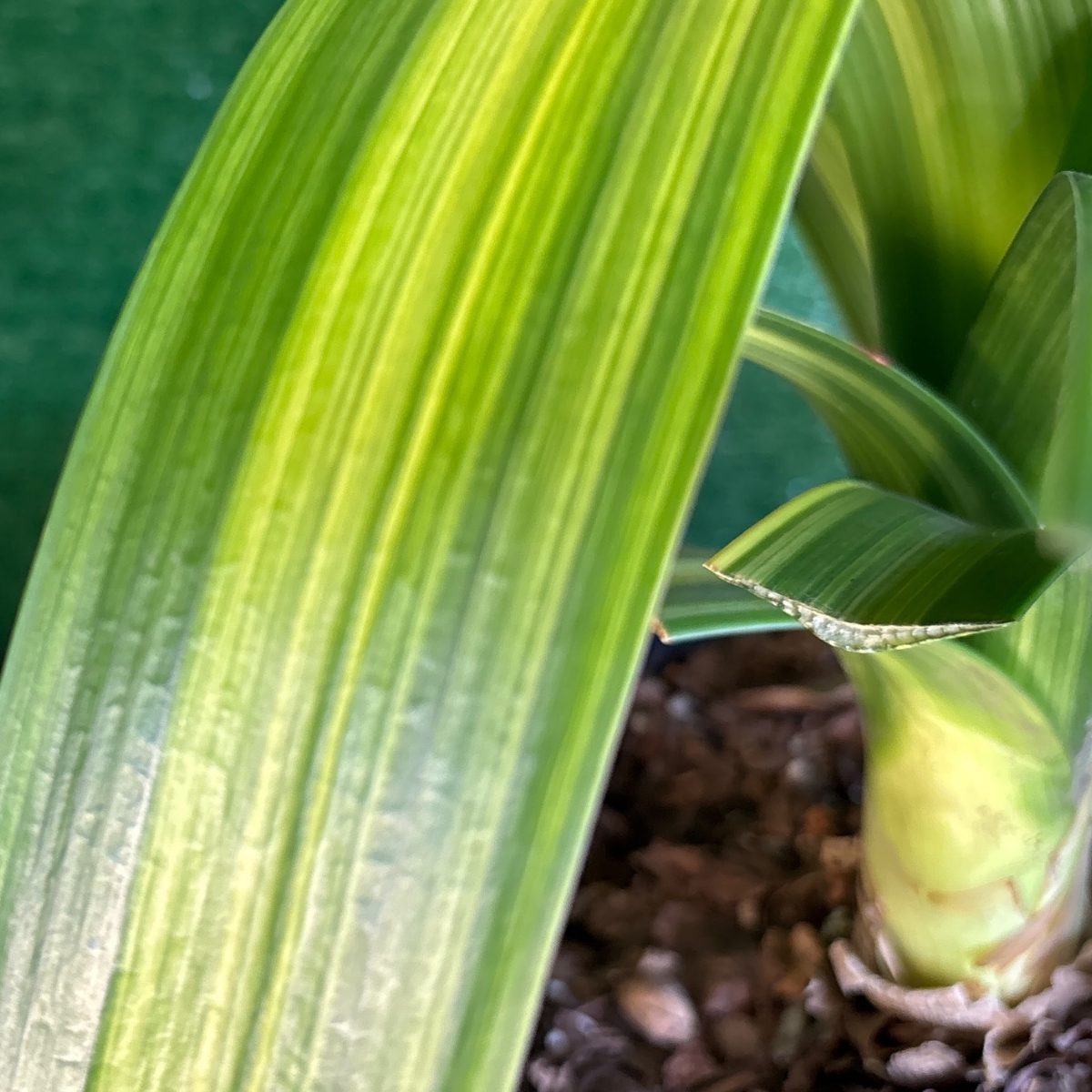
Most variegation is chimeral: the pattern does not come from the seed itself, but rather in plant cells in particular layers. Some patterns, like the Akebono, are more seed-stable than others. Where seed-stability has been reported, it is understood that it travels through the maternal line. However, the most reliable way to increase variegate is vegetatively through offsets or division.
Variegation (and how it is produced) is still not fully understood. Variegation varies from plant to plant, and variegation can strengthen, weaken or revert over time.
Why is this important?
The science behind flowering plants still fascinates scientists, enthusiasts and hobbyists across the globe. Understanding how nature evolves and persists is as, if not more, important than it was thousands of years ago. However, the science also helps breeders produce beautiful, one-of-a-kind Clivia plants in unimaginable colours. Knowing a plant's parentage, and what they produce, is as important as the plant itself and helps the breeder create astonishing plants, rather than guess what happens next.